Tech
Tech
From First Commits to First Principles: A Winter at ARIS
From First Commits to First Principles: A Winter at ARIS
ARIS' six-month winter internship offered a real-world experience where interns built production features, tackled complex business challenges, and learned to think beyond code. The program emphasized ownership, product thinking, and AI-first innovation in a collaborative environment.
ARIS' six-month winter internship offered a real-world experience where interns built production features, tackled complex business challenges, and learned to think beyond code. The program emphasized ownership, product thinking, and AI-first innovation in a collaborative environment.

Revati Gajjar, Assistant Manager
Revati Gajjar, Assistant Manager
Jul 23, 2026
Jul 23, 2026
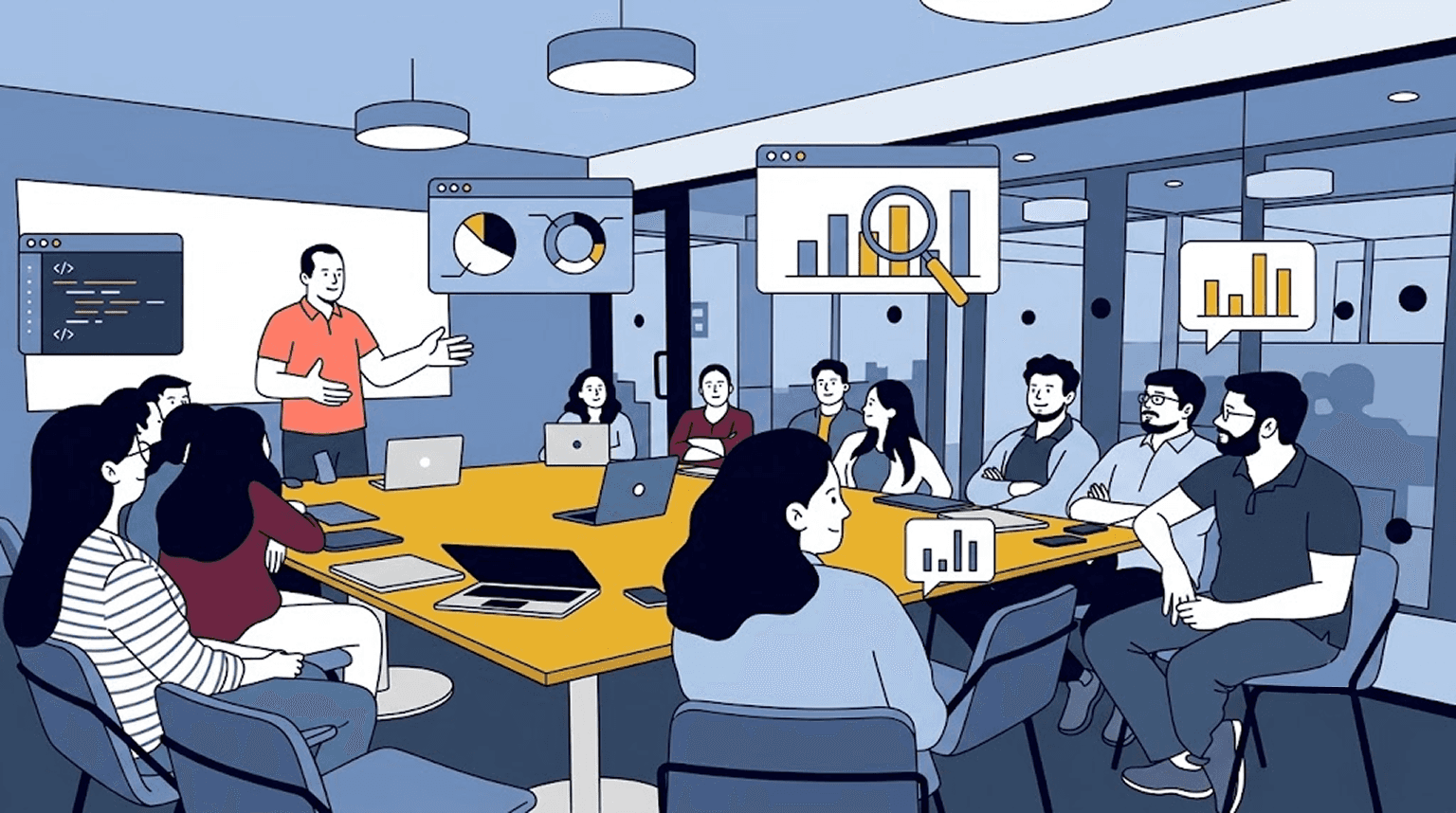
There's a version of an internship that most people have experienced or at least heard of. You
show up, you're handed a small, self-contained task, you complete it, and you leave with a
certificate and a LinkedIn update. The learning is real, but it's contained. Bounded. Safe.
That is not what happened here.
Over six months, interns from various universities worked across engineering and product
functions at ARIS. They shipped features to production. They navigated large codebases, made
architectural decisions, and sat in rooms where real business calls were being made. And by
the time it was over, most of them said some version of the same thing: I didn't expect it to be
this real.
There's a version of an internship that most people have experienced or at least heard of. You show up, you're handed a small, self-contained task, you complete it, and you leave with a certificate and a LinkedIn update. The learning is real, but it's contained. Bounded. Safe.
That is not what happened here.
Over six months, interns from various universities worked across engineering and product functions at ARIS. They shipped features to production. They navigated large codebases, made architectural decisions, and sat in rooms where real business calls were being made. And by the time it was over, most of them said some version of the same thing: I didn't expect it to be this real.
The Work Was Never Manufactured
The Work Was Never Manufactured
Before any of them wrote a line of code, they were asked harder questions: Why are we building
this? What does the user actually need? What does this cost the business if it's wrong?
That orientation of product thinking before engineering ran through every project. One intern
built ReTag, an override interface that lets operations teams correct fields misread by CV and
GenAI pipelines on delivery documents, a feature that sits directly in the path of auto-delivery
workflows. Another built a data pipeline to turn raw GPS pings into meaningful logistics events,
and shipped a project health dashboard within two weeks of starting. A third designed a
three-layer data ingestion architecture for financial anomaly detection, after discovering
mid-project that clean production data mattered more than a sophisticated model. And across
the product track, one intern took an ETA prediction engine from scoping all the way through to
a PRD and shipped three distinct problems, each demanding a different kind of thinking.
None of these were warm-up exercises. They were real briefs, with real stakes, handed to
people who had never worked in the industry before.
Before any of them wrote a line of code, they were asked harder questions: Why are we building this? What does the user actually need? What does this cost the business if it's wrong?
That orientation of product thinking before engineering ran through every project. One intern built ReTag, an override interface that lets operations teams correct fields misread by CV and GenAI pipelines on delivery documents, a feature that sits directly in the path of auto-delivery workflows. Another built a data pipeline to turn raw GPS pings into meaningful logistics events, and shipped a project health dashboard within two weeks of starting. A third designed a three-layer data ingestion architecture for financial anomaly detection, after discovering mid-project that clean production data mattered more than a sophisticated model. And across the product track, one intern took an ETA prediction engine from scoping all the way through to a PRD and shipped three distinct problems, each demanding a different kind of thinking.
None of these were warm-up exercises. They were real briefs, with real stakes, handed to people who had never worked in the industry before.
Before any of them wrote a line of code, they were asked harder questions: Why are we building this? What does the user actually need? What does this cost the business if it's wrong?
That orientation of product thinking before engineering ran through every project. One intern built ReTag, an override interface that lets operations teams correct fields misread by CV and GenAI pipelines on delivery documents, a feature that sits directly in the path of auto delivery workflows. Another built a data pipeline to turn raw GPS pings into meaningful logistics events, and shipped a project health dashboard within two weeks of starting. A third designed a three-layer data ingestion architecture for financial anomaly detection, after discovering mid-project that clean production data mattered more than a sophisticated model. And across the product track, one intern took an ETA prediction engine from scoping all the way through to a PRD and shipped three distinct problems, each demanding a different kind of thinking.
None of these were warm-up exercises. They were real briefs, with real stakes, handed to people who had never worked in the industry before.

“What initially seemed like a simple problem unfolded into a system filled with edge cases,
business scenarios, and technical nuances. Every implementation decision had implications
beyond just making the code work.”
Kartik Walia, Engineering Intern, DTU Delhi
“What initially seemed like a simple problem unfolded into a system filled with edge cases, business scenarios, and technical nuances. Every implementation decision had implications beyond just making the code work.”
Kartik Walia, Engineering Intern, DTU Delhi
“What initially seemed like a simple problem unfolded into a system filled with edge cases, business scenarios, and technical nuances. Every implementation decision had implications beyond just making the code work.”
Kartik Walia, Engineering Intern, DTU Delhi
Thinking Before Building
Thinking Before Building
What set the experience apart wasn't just the scope of the work but it was how they were taught
to approach it. Every problem started with understanding before execution: reading the business
context, talking to stakeholders, questioning assumptions.
What set the experience apart wasn't just the scope of the work but it was how they were taught to approach it. Every problem started with understanding before execution: reading the business context, talking to stakeholders, questioning assumptions.
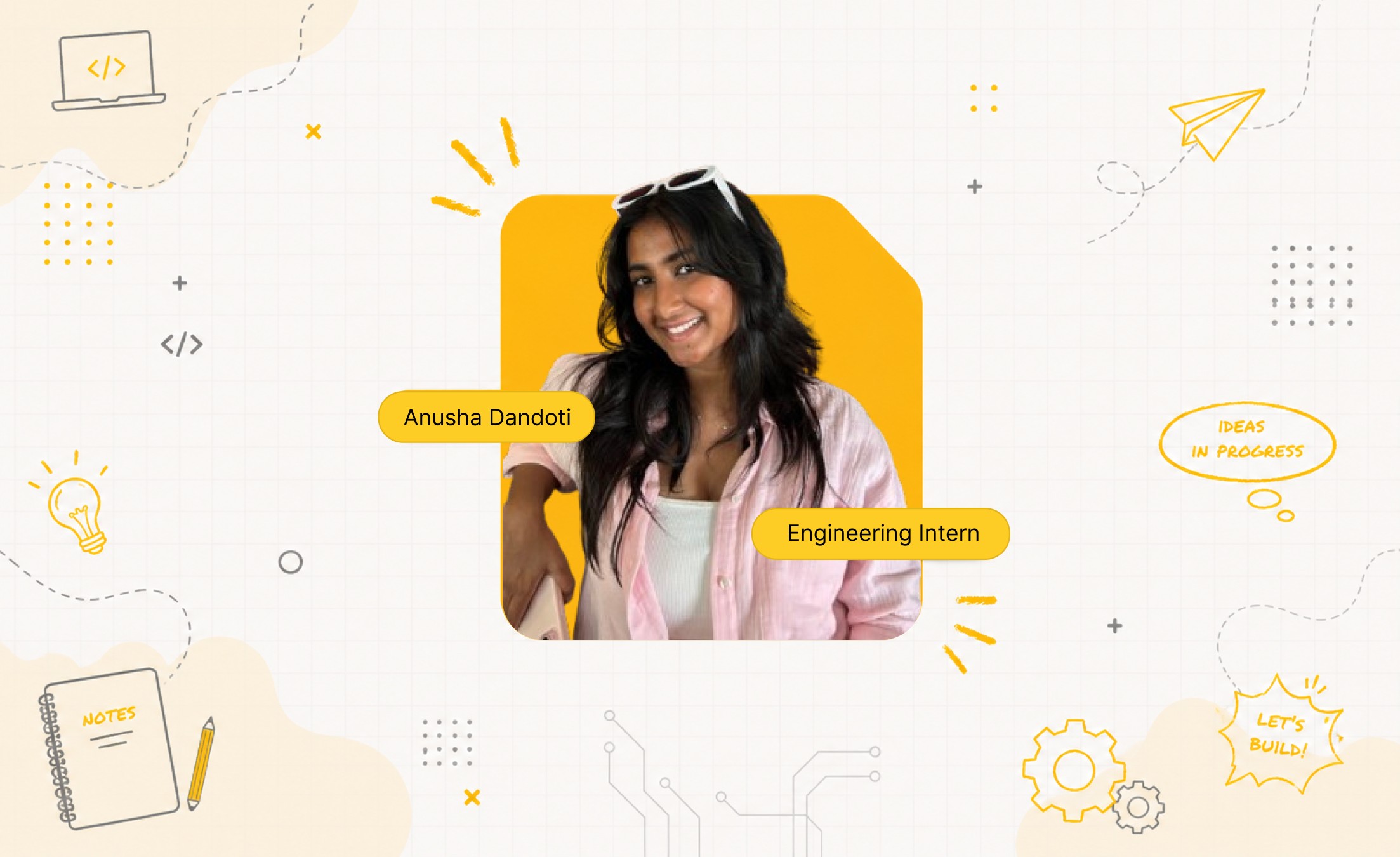
“My approach began with understanding the business context before exploring technical
solutions. Through several iterations, we realised that establishing a strong data foundation was
more important than selecting a specific model.”
Anusha Dandoti, Engineering Intern, MSRIT Bangalore
“My approach began with understanding the business context before exploring technical solutions. Through several iterations, we realised that establishing a strong data foundation was more important than selecting a specific model.”
Anusha Dandoti, Engineering Intern, MSRIT Bangalore
“My approach began with understanding the business context before exploring technical
solutions. Through several iterations, we realised that establishing a strong data foundation was more important than selecting a specific model.”
Anusha Dandoti, Engineering Intern, MSRIT Bangalore
The weekly intern showcases reinforced this. What could have been routine progress updates
became something more useful as a practice ground for communicating ideas clearly, defending
decisions, and learning to put work in front of an audience that would push back.
The weekly intern showcases reinforced this. What could have been routine progress updates became something more useful as a practice ground for communicating ideas clearly, defending decisions, and learning to put work in front of an audience that would push back.

“We not only got to present the work we had done and receive feedback, but also got the
chance to learn how to put forth our ideas in the best possible way.”
Jiya Agrawal, Engineering Intern, Plaksha University
“We not only got to present the work we had done and receive feedback, but also got the chance to learn how to put forth our ideas in the best possible way.”
Jiya Agrawal, Engineering Intern, Plaksha University
“We not only got to present the work we had done and receive feedback, but also got the
chance to learn how to put forth our ideas in the best possible way.”
Jiya Agrawal, Engineering Intern, Plaksha University
AI as Architecture, Not Autocomplete
AI as Architecture, Not Autocomplete
One thing that made this cohort's experience distinct was working inside a company that treats
AI as infrastructure, not a shortcut. Interns weren't using AI to generate boilerplate. They were
building systems where AI was load-bearing.
Responsibility to work with Model Context Protocol of connecting Claude to internal codebases
to give it real operational context, led to a workshop moment that reframed how they think about
software entirely. The model didn't just assist. It connected dots across the system in ways that
weren't anticipated.
One thing that made this cohort's experience distinct was working inside a company that treats AI as infrastructure, not a shortcut. Interns weren't using AI to generate boilerplate. They were building systems where AI was load-bearing.
Responsibility to work with Model Context Protocol of connecting Claude to internal codebases to give it real operational context, led to a workshop moment that reframed how they think about software entirely. The model didn't just assist. It connected dots across the system in ways that weren't anticipated.
One thing that made this cohort's experience distinct was working inside a company that treats AI as infrastructure, not a shortcut. Interns weren't using AI to generate boilerplate. They were building systems where AI was load-bearing.
Responsibility to work with Model Context Protocol of connecting Claude to internal codebases to give it real operational context, led to a workshop moment that reframed how they think about software entirely. The model didn't just assist. It connected dots across the system in ways that weren't anticipated.

“In a classroom, AI feels like an external tool you use. In that room, I realised the future of
engineering is about architecting AI into the fabric of the product so it can think, adapt, and
solve problems alongside you.”
Harshita Gupta, Engineering Intern, Thapar University
“In a classroom, AI feels like an external tool you use. In that room, I realised the future of engineering is about architecting AI into the fabric of the product so it can think, adapt, and solve problems alongside you.”
Harshita Gupta, Engineering Intern, Thapar University
“In a classroom, AI feels like an external tool you use. In that room, I realised the future of engineering is about architecting AI into the fabric of the product so it can think, adapt, and solve problems alongside you.”
Harshita Gupta, Engineering Intern, Thapar University
The People Made It Stick
The People Made It Stick
Technical growth was a given. What surprised most interns was how much the environment
shaped the way they thought.
Mentors at ARIS with decades of experience made time; not in a scheduled, obligatory way, but genuinely. Questions were welcomed, including the ones that felt obvious. One intern, nervous about running a query on production, was told simply: “Run it. Certain things can only be gained from experience. You learn something only from mistakes.” That kind of permission to act, to observe, to occasionally get it wrong is hard to replicate in a classroom.
Access to leadership was direct and informal. Interns were in rooms where strategy was being discussed, not just rooms where tasks were being assigned. For several of them, watching how senior people approached ambiguous problems on what they asked first, where they slowed down became as formative as the technical work itself.
Technical growth was a given. What surprised most interns was how much the environment shaped the way they thought.
Mentors at ARIS with decades of experience made time; not in a scheduled, obligatory way, but genuinely. Questions were welcomed, including the ones that felt obvious. One intern, nervous about running a query on production, was told simply: “Run it. Certain things can only be gained from experience. You learn something only from mistakes.” That kind of permission to act, to observe, to occasionally get it wrong is hard to replicate in a classroom.
Access to leadership was direct and informal. Interns were in rooms where strategy was being discussed, not just rooms where tasks were being assigned. For several of them, watching how senior people approached ambiguous problems on what they asked first, where they slowed down became as formative as the technical work itself.

“I had real access to Leadership throughout the internship. Not in a scheduled check-in kind of
way. In a 'you are in the room when the real thinking is happening' kind of way. That exposure
shaped how I think in ways I'm still noticing”
Diwakar Sharma, Product Intern, BITS Pilani
“I had real access to Leadership throughout the internship. Not in a scheduled check-in kind of way. In a 'you are in the room when the real thinking is happening' kind of way. That exposure shaped how I think in ways I'm still noticing”
Diwakar Sharma, Product Intern, BITS Pilani
“I had real access to Leadership throughout the internship. Not in a scheduled check-in kind of way. In a 'you are in the room when the real thinking is happening' kind of way. That exposure shaped how I think in ways I'm still noticing”
Diwakar Sharma, Product Intern, BITS Pilani
What Six Months Actually Looks Like
What Six Months Actually Looks Like
Six months is long enough for a project to surprise you, long enough for a domain to stop feeling foreign, and long enough to stop feeling like an intern and start feeling like someone who belongs in the room.
That's what this cohort got; not a curated learning experience, but a real one. The kind where the problems don't have clean edges, the data doesn't cooperate, and the best decisions require understanding the business as much as the code.
We're proud of what they built. And honestly, we're looking forward to seeing what they build next.
Interested in working at ARIS ? Keep an eye on our careers page for upcoming current openings.
Six months is long enough for a project to surprise you, long enough for a domain to stop feeling foreign, and long enough to stop feeling like an intern and start feeling like someone who belongs in the room.
That's what this cohort got; not a curated learning experience, but a real one. The kind where the problems don't have clean edges, the data doesn't cooperate, and the best decisions require understanding the business as much as the code.
We're proud of what they built. And honestly, we're looking forward to seeing what they build next.
Interested in working at ARIS ? Keep an eye on our careers page for upcoming current openings.
Partner With Us
From supply to execution, we make construction
simple, reliable, and scalable.
Contact Us
© 2025, Arisinfra Solutions Limited. All Rights Reserved.
Partner With Us
From supply to execution, we make construction simple, reliable, and scalable.
Contact Us
© 2025, Arisinfra Solutions Limited. All Rights Reserved.